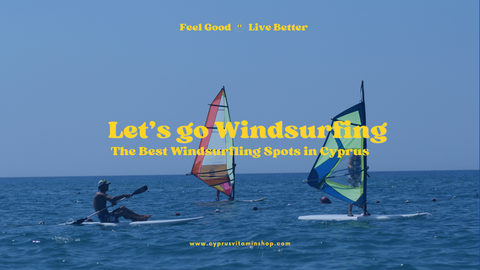
Meltemi, the strong, dry, cool northerly winds that sweep across the Aegean Sea and Eastern Mediterranean hit the eastern Med from June through August like it has a personal grievance. On Cyprus, that means consistent thermal winds building through the afternoon - regularly reaching 4 to 5 Beaufort by midday- and a warm flat sea that forgives beginners and rewards experienced riders. If you windsurf, or have ever thought about it, this island has more going for it than most people realise. And unlike most outdoor sports here, it doesn't stop when summer does.
Here's where to go, what to expect at each spot, and what the sport actually does to your body.
The Best Spots, by Region
Larnaca. The most options, the most variety
Larnaca is where most people start, and for good reason. Three spots within easy reach of each other cover beginner to advanced.
Makenzy Beach has become one of the most popular freestyle wave sailing spots on the island. Winds build from around midday and sit between 4 and 6 Beaufort through the afternoon; consistent enough to plan your day around. There's a school based there with lessons and equipment rental, which makes it the most practical entry point if you're new to the sport or just new to the island.
Pervolia, just down the coast, is better known as a winter spot. South-southwesterly winds can reach 7 Beaufort, which makes it one of the more challenging locations on the island and worth knowing about if wave riding is what you're after.
The Golden Bay Hotel area catches strong winter winds too — up to 6 Beaufort with waves reaching two metres. Not a place to learn, but a good session when the conditions align.
The Nicosia Windsurfing Club is also based in Larnaca (the name is a legacy thing). They run a full windsurfing, kite surfing and SUP school, with equipment available to rent or buy. If you're looking for structured lessons anywhere in the Larnaca area, this is the place to start.
Famagusta. Protaras and Ayia Napa
At Protaras, summer winds are typically south-westerly, sitting at 3 to 4 Beaufort and building to an average of 5 Beaufort as the day progresses — side-offshore, which keeps the sea relatively flat and makes it suitable for free-ride sailing. Ayia Napa and Protaras both benefit from Cyprus's warm Mediterranean climate, and water sports are genuinely available year-round here. Early mornings in summer, when the sea is flat and calm before the thermal kicks in, are when you'll see wakeboarders out — the conditions are ideal for it.
The southeast corner of the island also has some of the clearest water on Cyprus. Cape Greco sits just to the south; if you're combining a morning session with a walk through the national park afterwards, it's a good day out.
Limassol. Lady's Mile and Curium
Lady's Mile gets an easterly onshore wind in winter and builds to 5 Beaufort in summer. It's a long, exposed stretch of beach west of the port — not pretty, but functional, and rarely crowded with non-water-sports visitors. Curium, further west along the coast, is one of the few spots where you can sail throughout the year with waves reaching double head height. The ruins above the cliff are worth a look before or after.
Paphos. The quieter options
The Paphos district has several spots spread along its coastline - Helios Bay, Potima, Geroskipou, Polis, and Latchi - that offer windsurfing in quieter surroundings. Latchi in particular, near the Akamas peninsula, is a good choice if you want less company on the water. The northwest coast doesn't have the established schools and rental infrastructure of Larnaca, so come with your own equipment or plan ahead. The reward is water space and scenery that the busier spots can't match.
Maroni, between Larnaca and Limassol, also gets a mention as a wave riding spot. Another one for intermediate to advanced riders looking for an alternative to the main beaches.
When to Go
The short answer is: year-round. Cyprus's mild winters mean wave sailors and kite surfers actually prefer the cooler months — stronger, more consistent winds and none of the summer crowds.
For flat-water sailing and beginners, May to October is the window. July and August have the most reliable afternoon thermals. September and October are worth targeting — the sea is still around 27°C, the crowds have thinned, and the conditions remain good. Early mornings in summer offer flat water and lighter winds, better for technique work or wakeboarding. From around noon onwards is when sessions get interesting.
What Windsurfing Does to Your Body
This is where it gets more interesting than most people expect. Windsurfing is a full-body workout that newcomers consistently underestimate — until the morning after their first session, when raising their arms becomes an event!
Calories burned: A moderate session in light to moderate winds burns roughly 400 to 600 calories per hour. In stronger winds — the kind Makenzy or Pervolia serve up on a good day — where you're actively working the rig and using your bodyweight to manage power, that climbs to 700 to 900 calories per hour. For context, that's comparable to a sustained cycling session or swimming at a decent pace.
Muscle demands: The pulling and sheeting motion loads the lats, rhomboids, and biceps hard. Your core is under near-constant demand — balancing on a moving board while managing a sail means your stabilising muscles are working the entire time. Legs and glutes absorb the micro-adjustments your body is constantly making to stay upright. After a few sessions, the pattern of soreness tells you exactly what the sport is training.
Cardiovascular load: Flat-water sailing in moderate conditions sits at a comfortable aerobic intensity — good heart and lung work without hammering your joints. Stronger conditions push heart rate into the 140–160 bpm range and keep it there. It's genuinely effective cardio that doesn't feel like cardio, because you're too busy thinking about the wind angle.
Joint impact: Low. This matters if you're returning from a running injury or looking for something that keeps you moving without repetitive impact. The main injury risk is acute — falls, particularly when learning — not chronic overuse.
A Few Practical Notes Before You Go
Lessons first. If you haven't windsurfed before, start at Makenzy or with the Nicosia Windsurfing Club in Larnaca. A two-hour beginner lesson will save you significant frustration and probably prevent an injury. The fundamentals — how to water-start, how to manage the sail in gusts, how to fall without hurting yourself — are not intuitive and are much faster to learn from someone standing next to you.
Sun exposure. On the water in a Cyprus summer, you're getting direct UV plus reflected UV off the surface, in conditions where the index regularly hits 9 to 11. SPF 50 on exposed skin, a rash vest, and UV-rated sunglasses are not optional extras — they're just part of the kit.
Hydration. You don't notice how much you're sweating when you're in and out of the sea. Electrolyte loss over a two to three hour session is significant. Drink before you're thirsty, and bring more water than you think you'll need.
Rental vs. kit. Makenzy Beach and the Larnaca area have the best rental and lesson infrastructure. Protaras and Ayia Napa have operators too, particularly in summer. The Paphos spots are more self-sufficient — come equipped.
One Honest Note
Windsurfing has a steeper early learning curve than most water sports. The first few sessions are often more frustrating than fun. Most people who try it once and quit do so because they didn't get a proper introduction. Commit to three or four sessions — ideally with instruction in the first two — and the moment it clicks is distinct. After that, you'll look for it wherever you travel.
Cyprus, with its reliable winds, warm water, mild winters, and genuine variety of spots from beginner beaches to serious wave sailing locations, is a better place to learn and progress than most people on the island realise.